Walking to the Moon • In App Review 2026
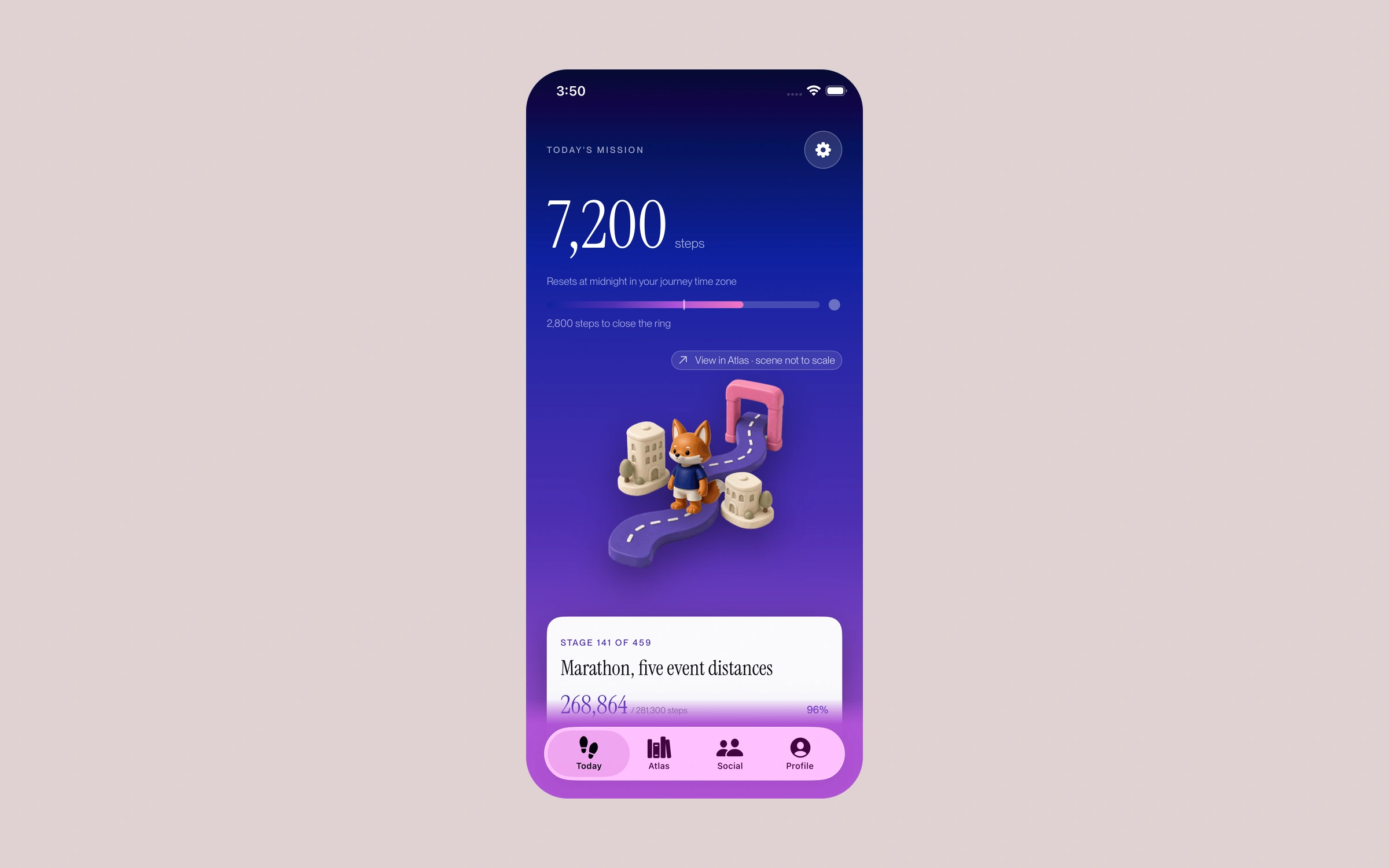
An iPhone app that turns your steps into a walk to the Moon
- Role
- Product Design, Brand Identity, Product Direction
- Timeline
- July 2026 to September 2026
- Team
- Solo
- Tools
- SwiftUI, HealthKit, Firebase, SwiftData, Figma, AI-assisted development
- Live
- In App Review
- TestFlight builds between July and the App Review submission
- 47
- External testers walking with it before launch
- 8
- Automated tests passing on the build sent to Apple
- 1,329
An iPhone app that turns your daily steps into a walk to the Moon. There are 459 drawn stops on the way. Apple has been reviewing it since September 23, 2026.
I made it alone: every choice, the look, and every screen. AI wrote most of the code.
Problem
Getting the numbers right makes the app feel worse on day one.
The Moon is 512 million steps away. A great day of walking barely moves the bar.
The easy fix is to fake it. Shrink the goal, puff up the numbers, show a crowd that isn't real. So I made one rule first: the app never makes your number look bigger than it is.
Research
Other step apps were honest or fun. I wanted both.
Step counters tell the truth, but they're boring. Step games are fun, but they stretch their numbers.
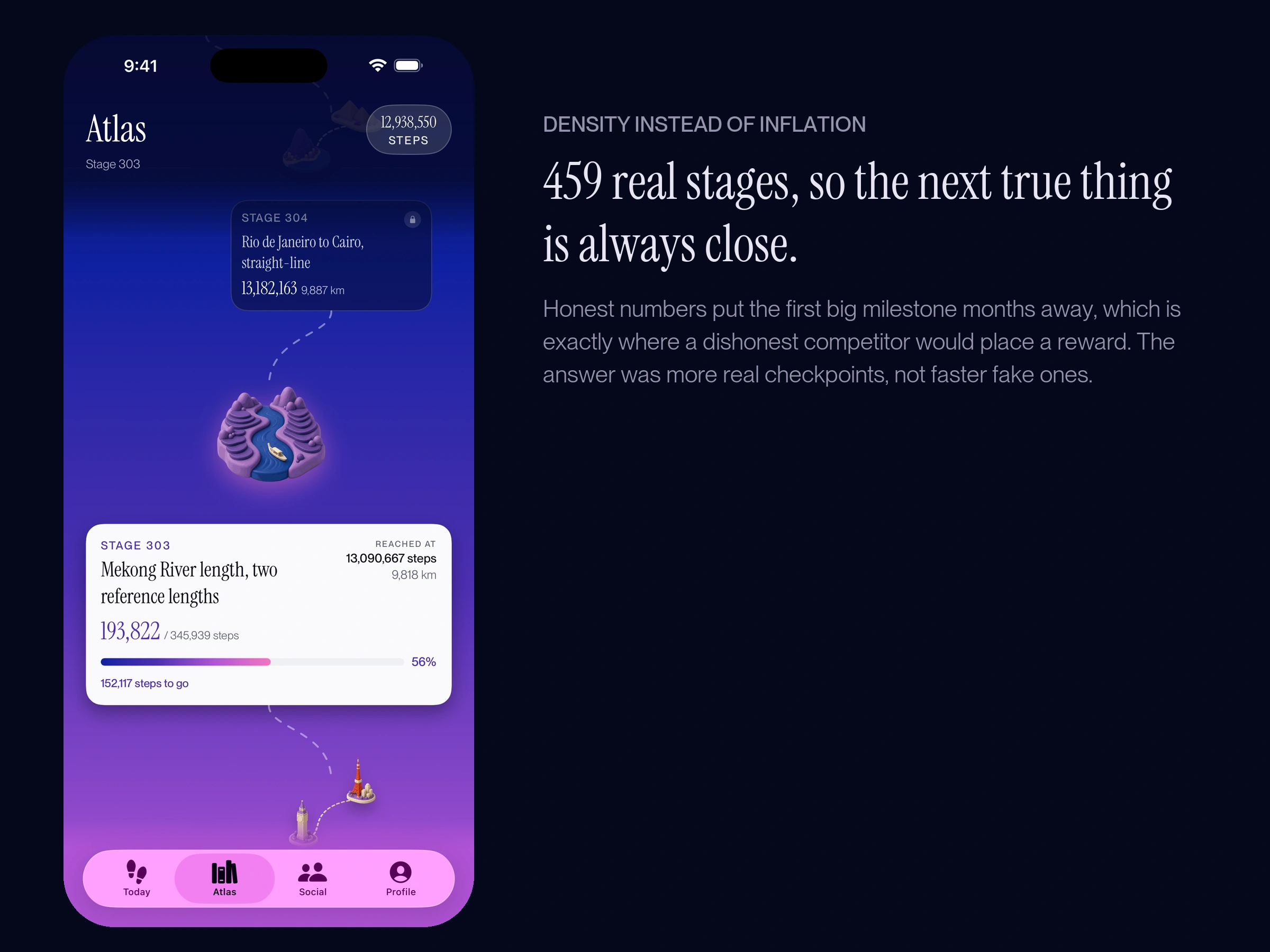
Honest numbers have one problem: the first big goal is months away. So I added 459 real stops on the way, and the next one is always close.
Process
My progress bar shows 2.52%, and I don't fake crowds.
The old bar looked full, but it wasn't measuring the real trip. I changed it to show the real distance. My 12.9 million steps are just 2.52 percent of the way.
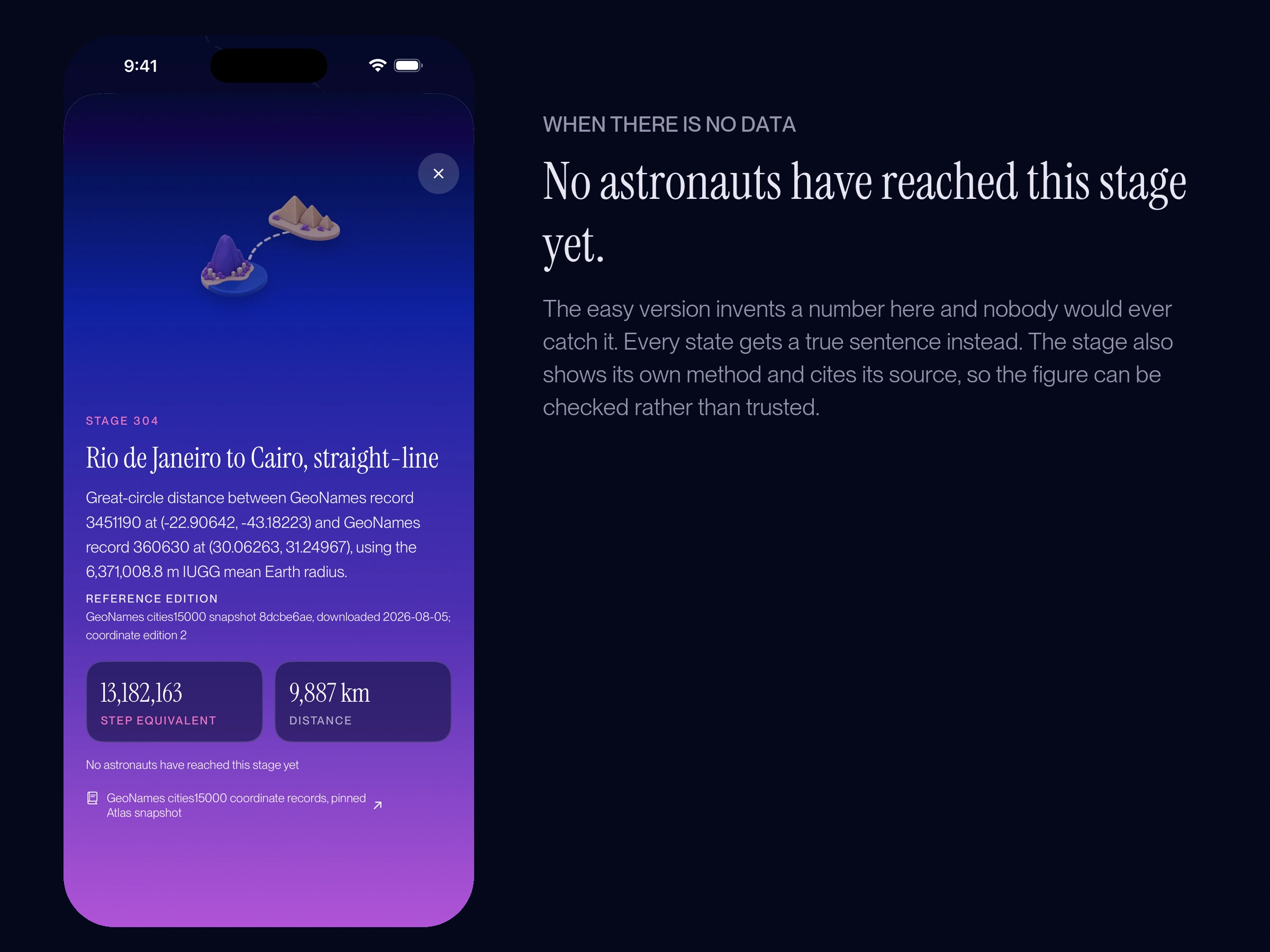
Each stop shows how many people reached it. I only count people the app can really see. If nobody is there yet, it says so.
Process
I kept old steps off the leaderboard, then undid my own rule.
You can bring years of old steps in from Apple Health. I worried longtime iPhone users would always win, so the leaderboard only counted new steps.
That backfired. My Moon said 12.9 million steps, but friends saw 12,591 and thought I was new. The daily, weekly and monthly boards were already fair. So on August 27, I undid my rule.
Final Design
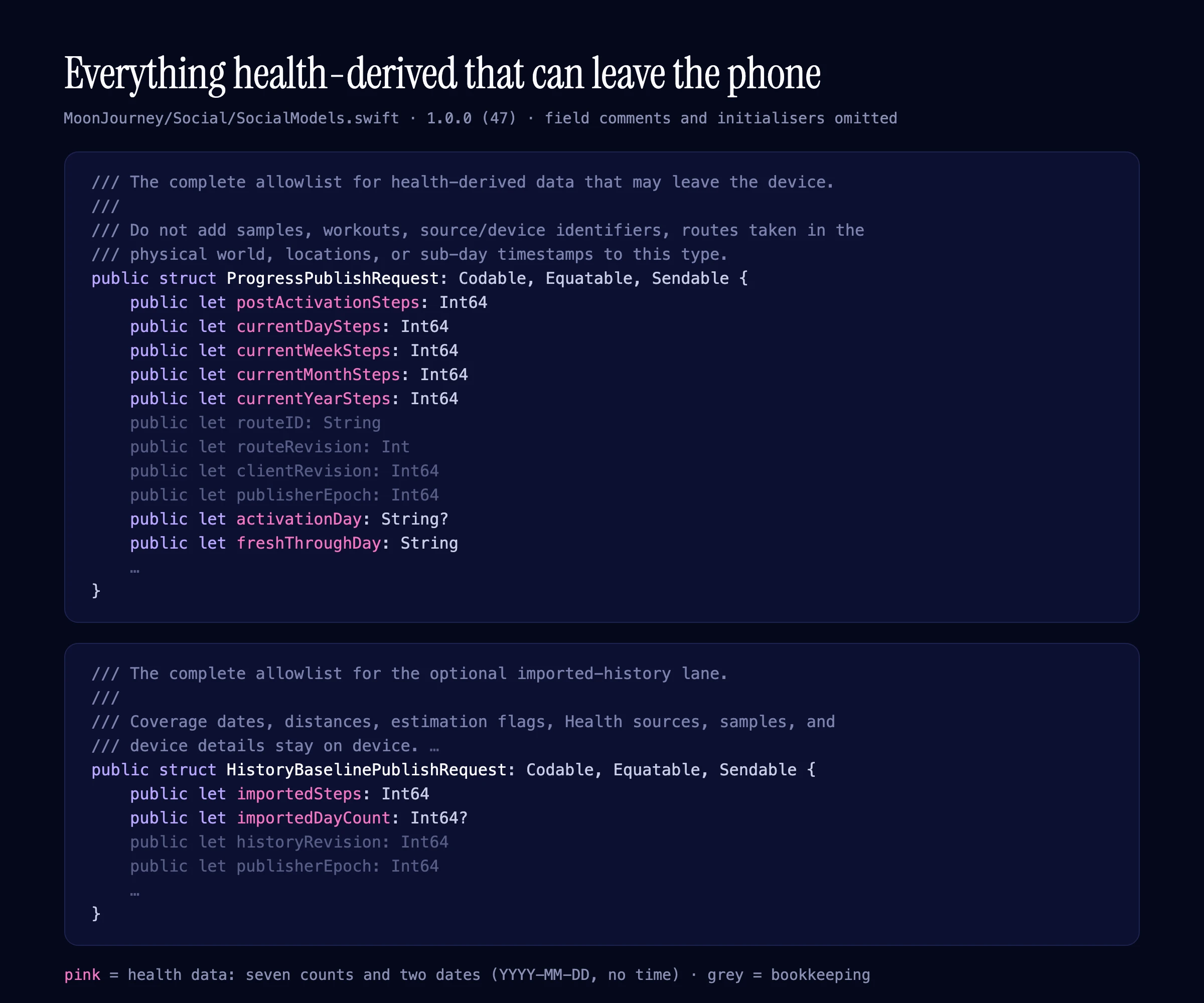
Only seven step counts and two dates of health data leave your phone.
Your step history stays on your phone. You don't need an account. If you turn on friends, only those few numbers get sent. I wrote that list right into the code.
Reflection
Apple is still reviewing it. Next time, I'd find testers sooner.
Eight testers is a small start. Launch will show if honest numbers keep people walking. More testers, sooner, might have caught my leaderboard mistake.
Public documents
The pages the app is required to publish.
- Privacy PolicyWhat the app reads and what never leaves your phone
- Terms of UseHow the app may be used
- SupportApple Health, Social, and account recovery answers
- 개인정보처리방침The privacy policy in Korean