Switchless • Concept 2025
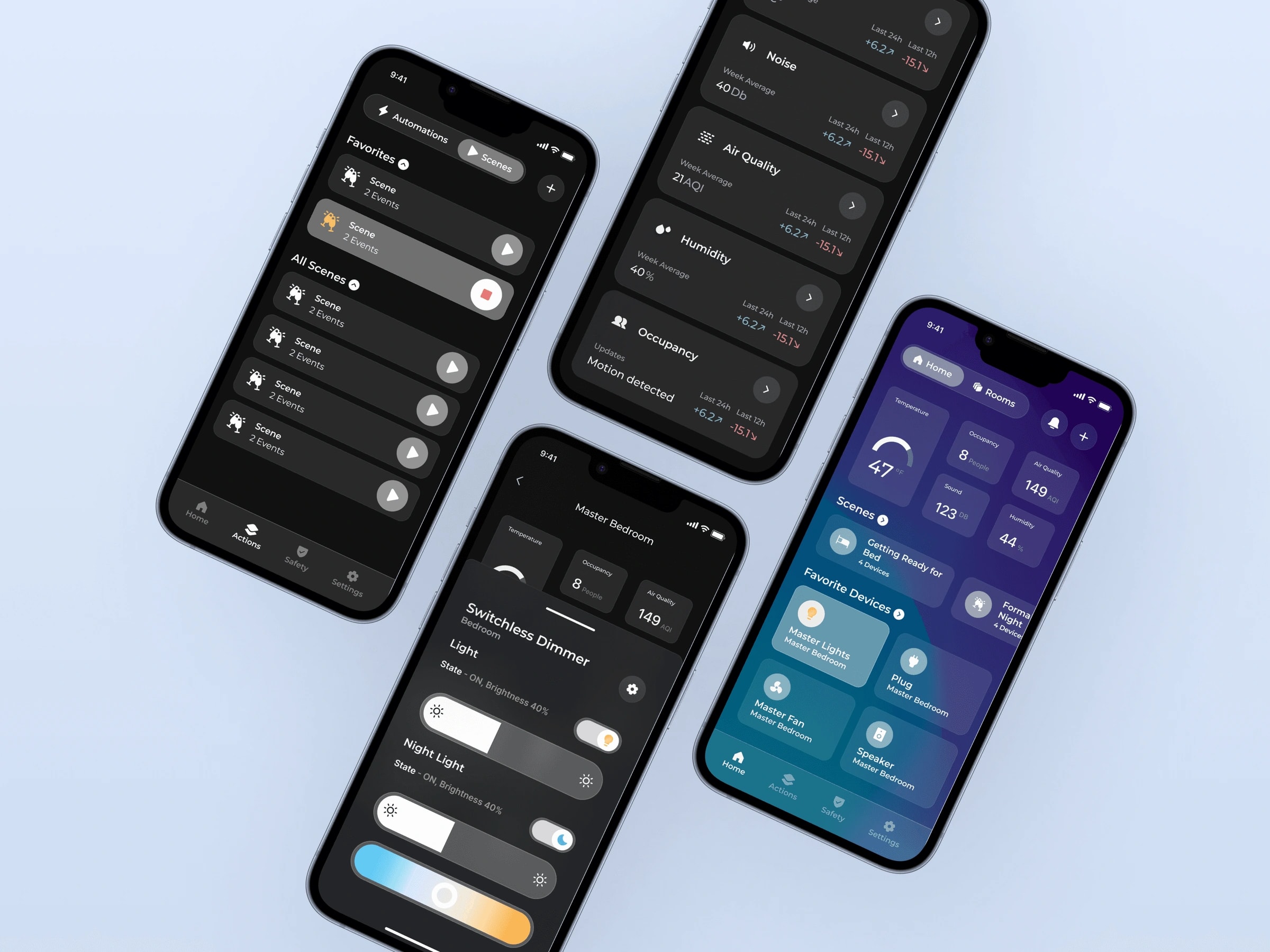
One app that runs all your smart home sensors
- Role
- Product Designer
- Timeline
- October 2024 to June 2025
- Team
- Kayley Vu, Warren Wu, Nicho Naugle
- Tools
- Figma
- Client
- Switchless (early-stage startup)
Switchless was a smart home startup: sensors plus one app to run them. I was the product designer on a team of four for nine months. It never launched, and the company has closed.
What I'd still defend: making home rules easy for anyone to set up.
Problem
Five sensors meant five apps and five ways of thinking.
In a normal smart home, temperature lives in one app and humidity in another. Each has its own screens and rules.
The goal: one picture of your home, not five. The hard part was rules. Take "when it's humid and the room is empty, run the fan." It's easy to say and easy to design badly.
Process
I mapped how the sensors talk to the phone before any screens.
With the team, I mapped what the hub senses and what it sends. Then, how fast the app must show it.
Why first? If the app says a light is on when it's off, people stop trusting it. The screen is only as honest as the data under it.
Process
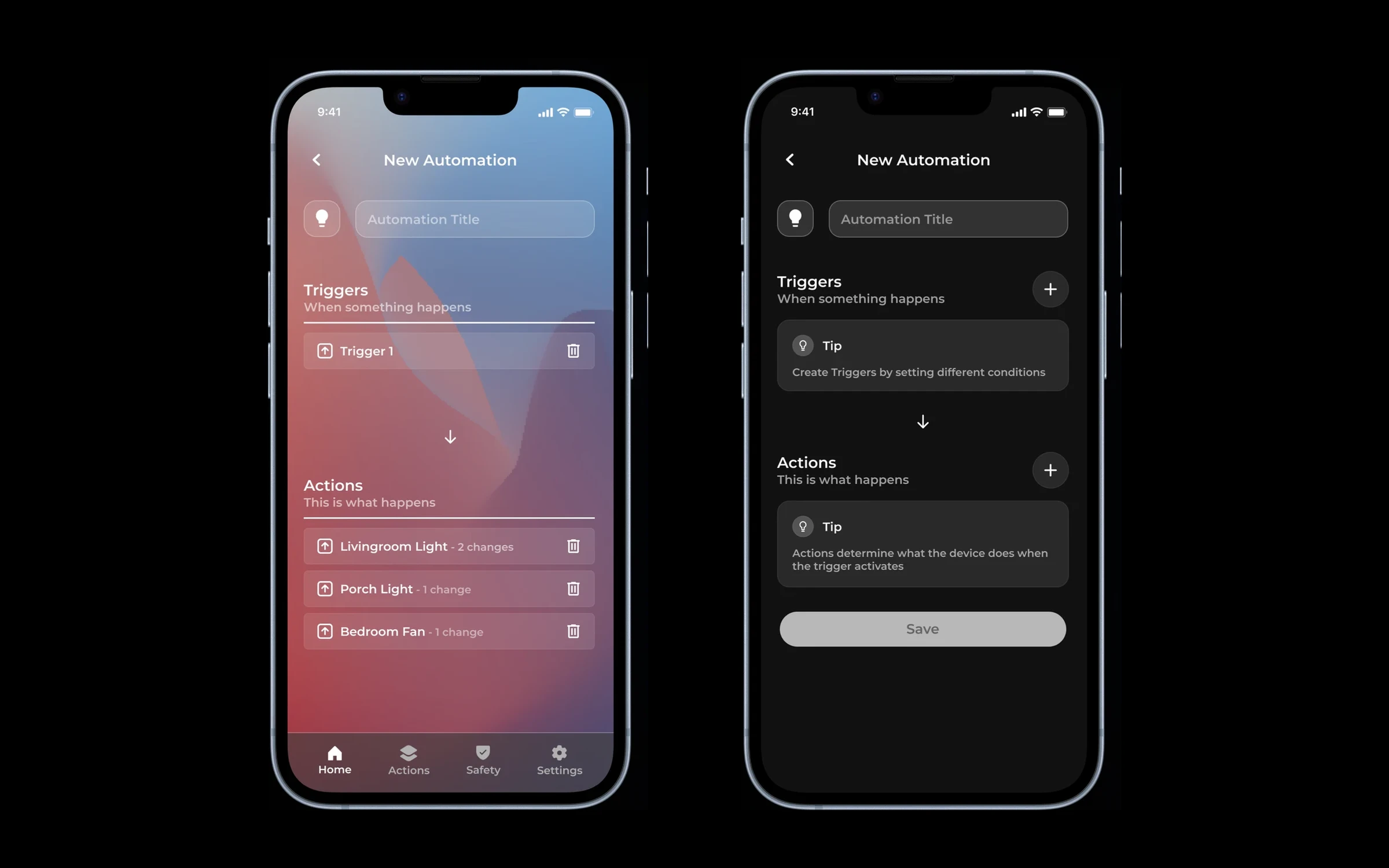
I turned home rules into something that reads like a sentence.
Most automation apps show every part of a rule at once, in one form.
I split each rule in two: "when something happens" and "this is what happens." Read top to bottom, it's a sentence. Those plain names helped more than any layout change. People could check a rule in their own words.
Process
We threw out our first look after the founders' weekly reviews.
Our first look used frosted glass over bright colors. It was trendy, but the numbers were hard to read.
We switched to solid dark cards with the same reading order on each. A weekly review only helps if you let it kill something you liked.
Final Design
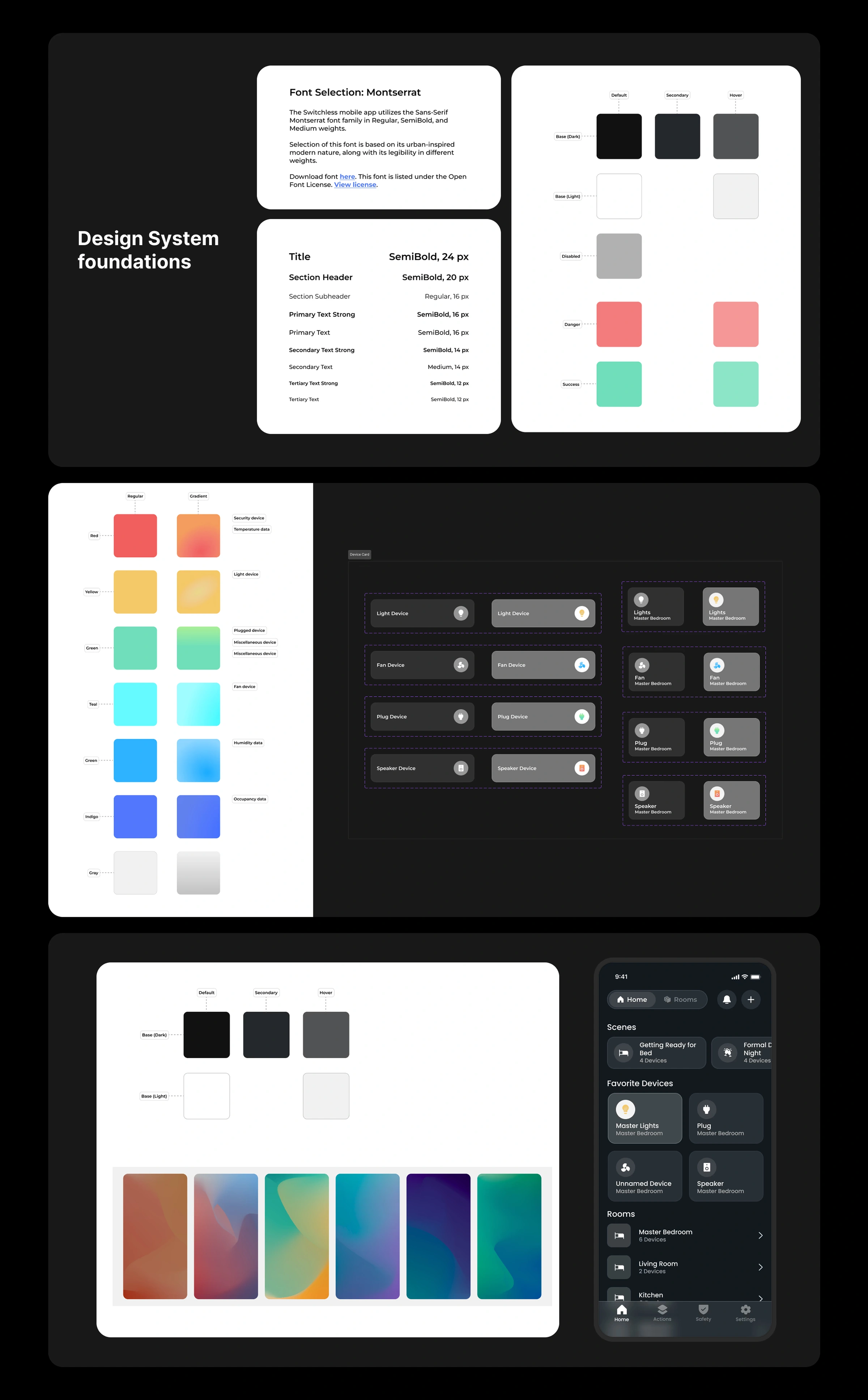
One design system for every sensor card, though the product never launched.
One typeface and one color per kind of sensor. Red always means security or temperature, and blue always means humidity.
Switchless was meant to replace five apps, so the one app had to work the same way everywhere.
Reflection
I couldn't say who opens the app and when. Now I ask first.
After the company closed, a mentor asked me something. Who opens this app, when, and why? I had no answer. We designed for "people who want a smart home." That's a market, not a moment.
Next time, I'd write that sentence before the first sketch.