Seneca • Concept 2026
A phone app that helps you understand your focus
- Role
- Product Design, Pitch
- Timeline
- May 9 to 10, 2026, 24 hours
- Team
- Alisa Liao, Isabelle Wang
- Tools
- Figma, FigJam, Notion, Claude
- Client
- Design Frontiers 2026, UCSD Design Co
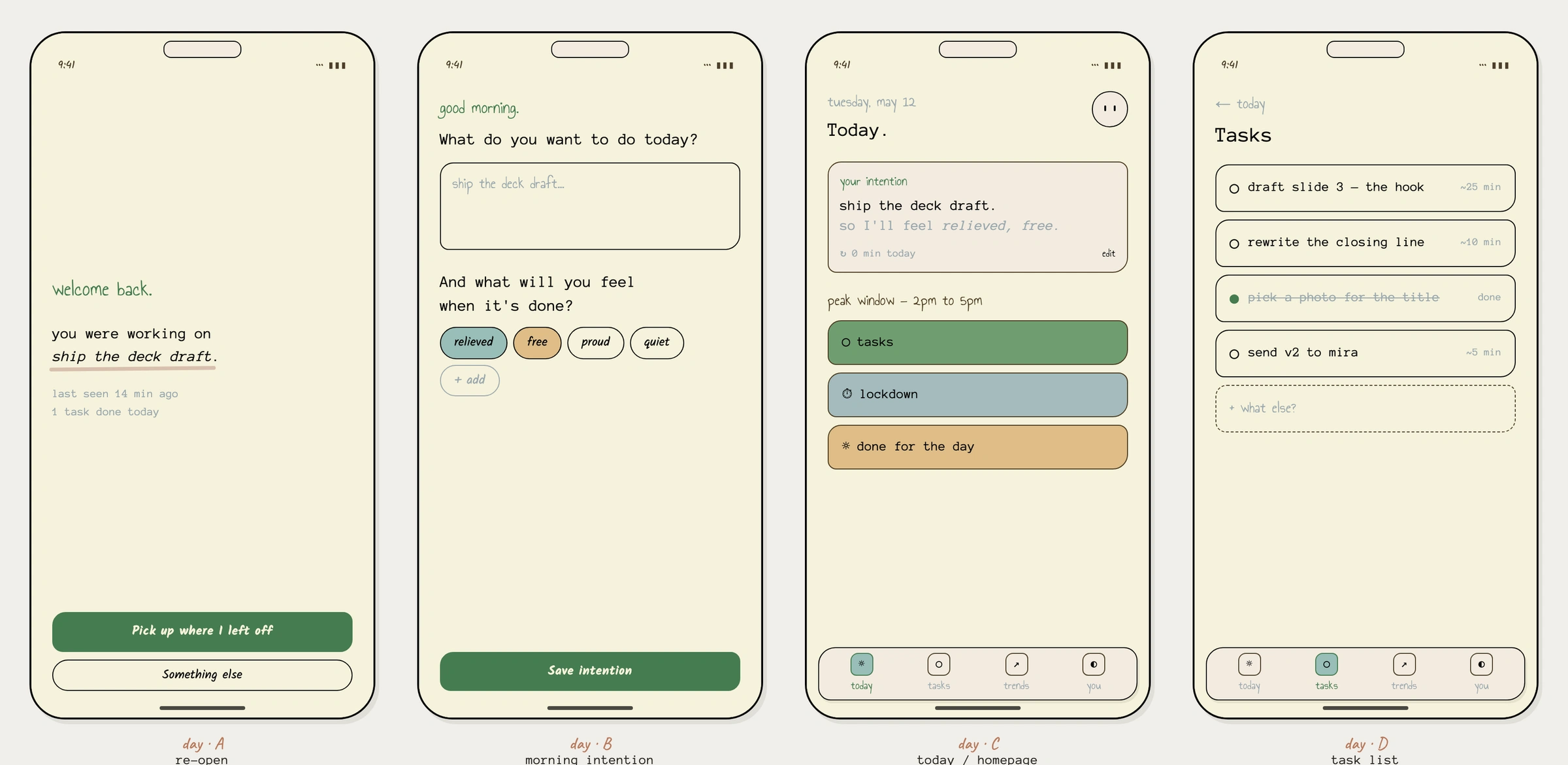
Seneca is an app concept that teaches focus as a skill instead of blocking apps. Alisa Liao, Isabelle Wang and I designed and pitched it in 24 hours at Design Frontiers 2026. It was never built.
I designed the Trends screen.
Problem
Blockers treat the person as an addict instead of teaching attention.
Most focus apps block or punish, and people just tap through. Telling someone to stop scrolling is like a "don't drink" sticker on a bottle. The sticker isn't the problem. The impulse is.

Process
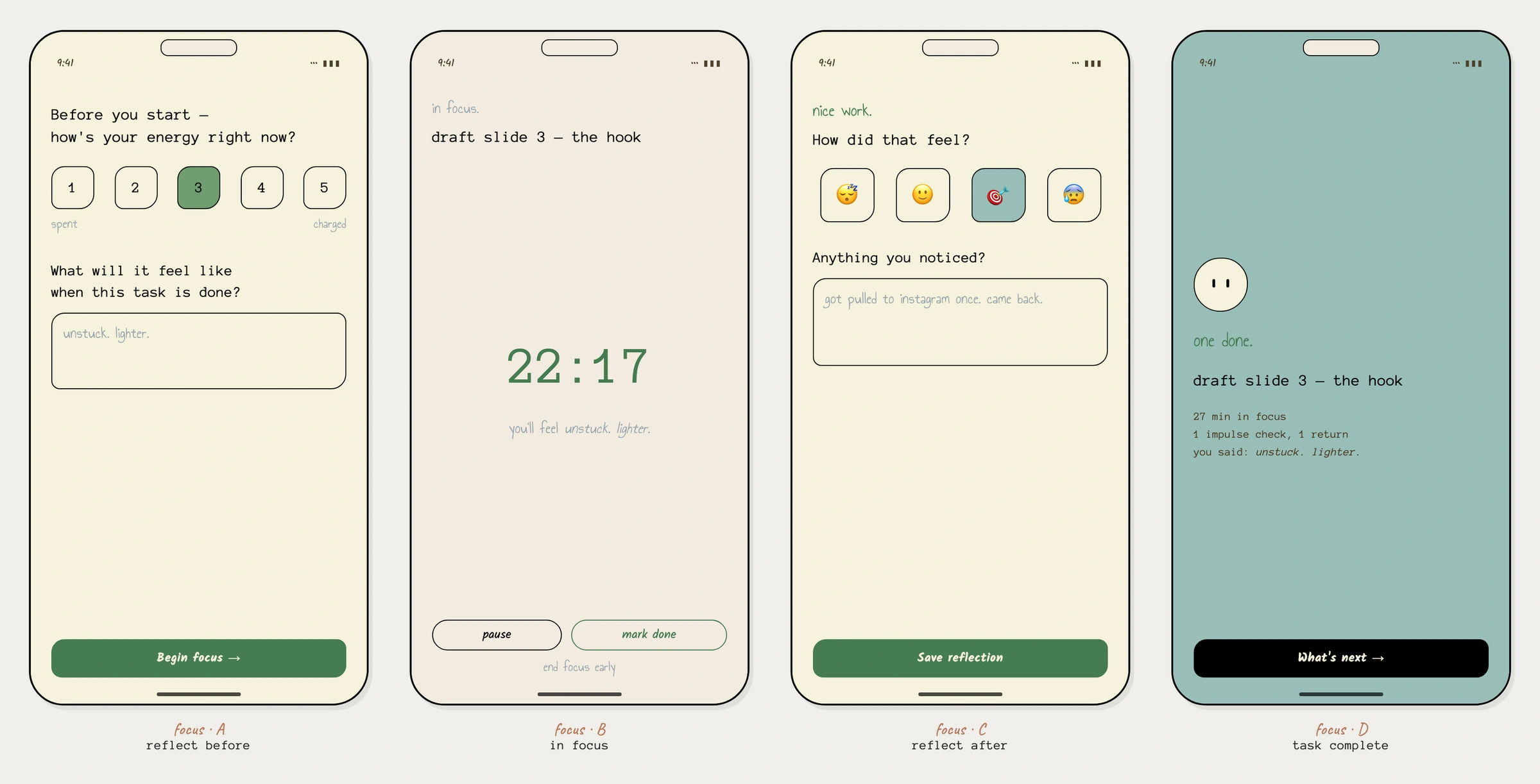
Two layers: learn how your attention works, then catch the moment it slips.
The first layer teaches. A quick focus test describes how your attention works, in plain words.
The second layer catches the moment. When you open an app you called a trap, Seneca quotes your own goal back. You can still open it. That button is ranked last, but never removed.
Process
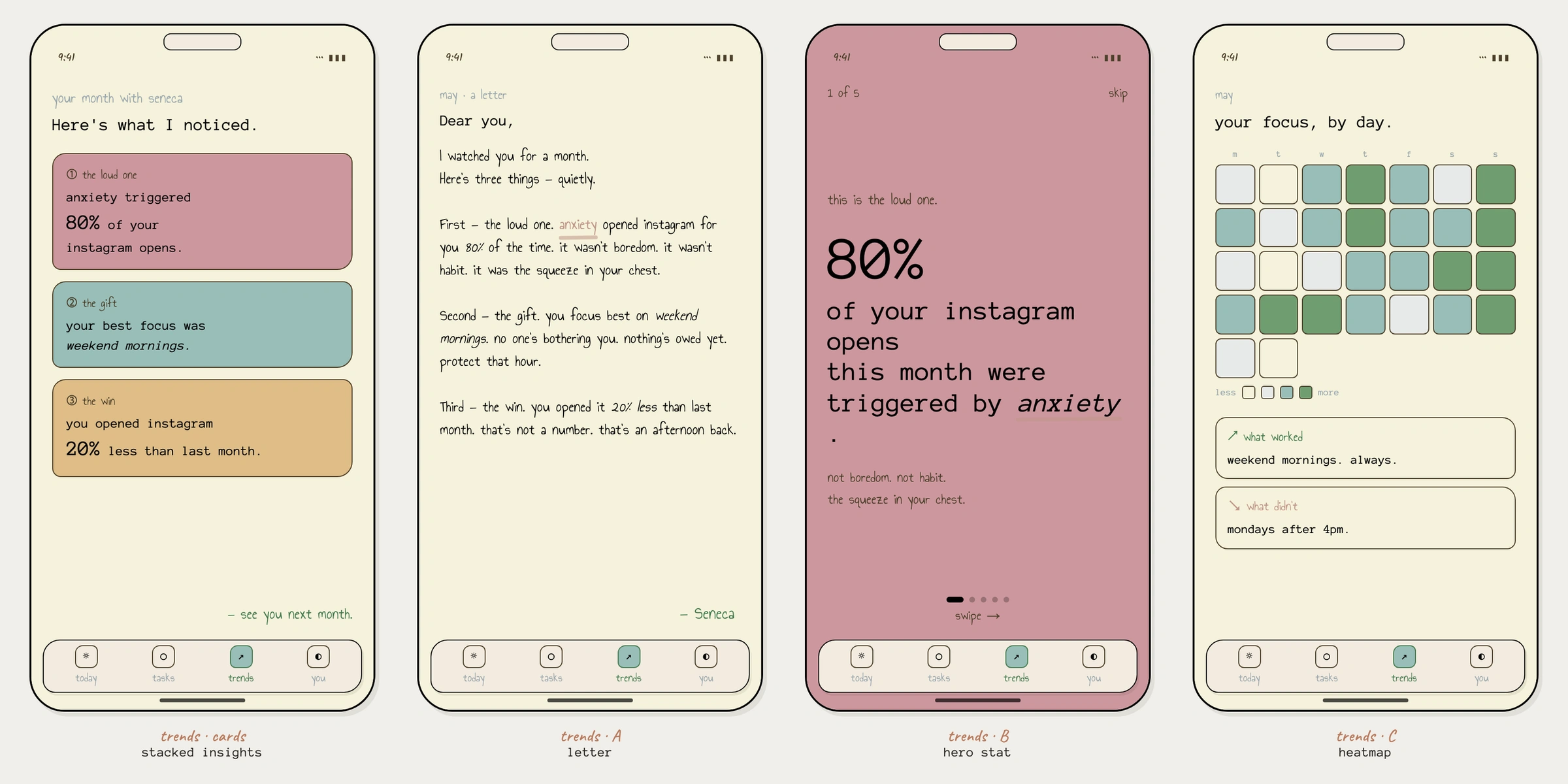
I designed Trends to read like a letter, not a report card.
My part was the Trends tab, where Seneca shares what it noticed over a month. I tried four directions.
The best ones pair a hard pattern with a win. It reads like a mentor's letter, not a report card.
Reflection
We pitched it in 24 hours, with four of five screens still placeholders.
I opened and closed the pitch. But on pitch morning, only one screen was real. Next time, I'd finish one screen early so the idea has something to stand on.